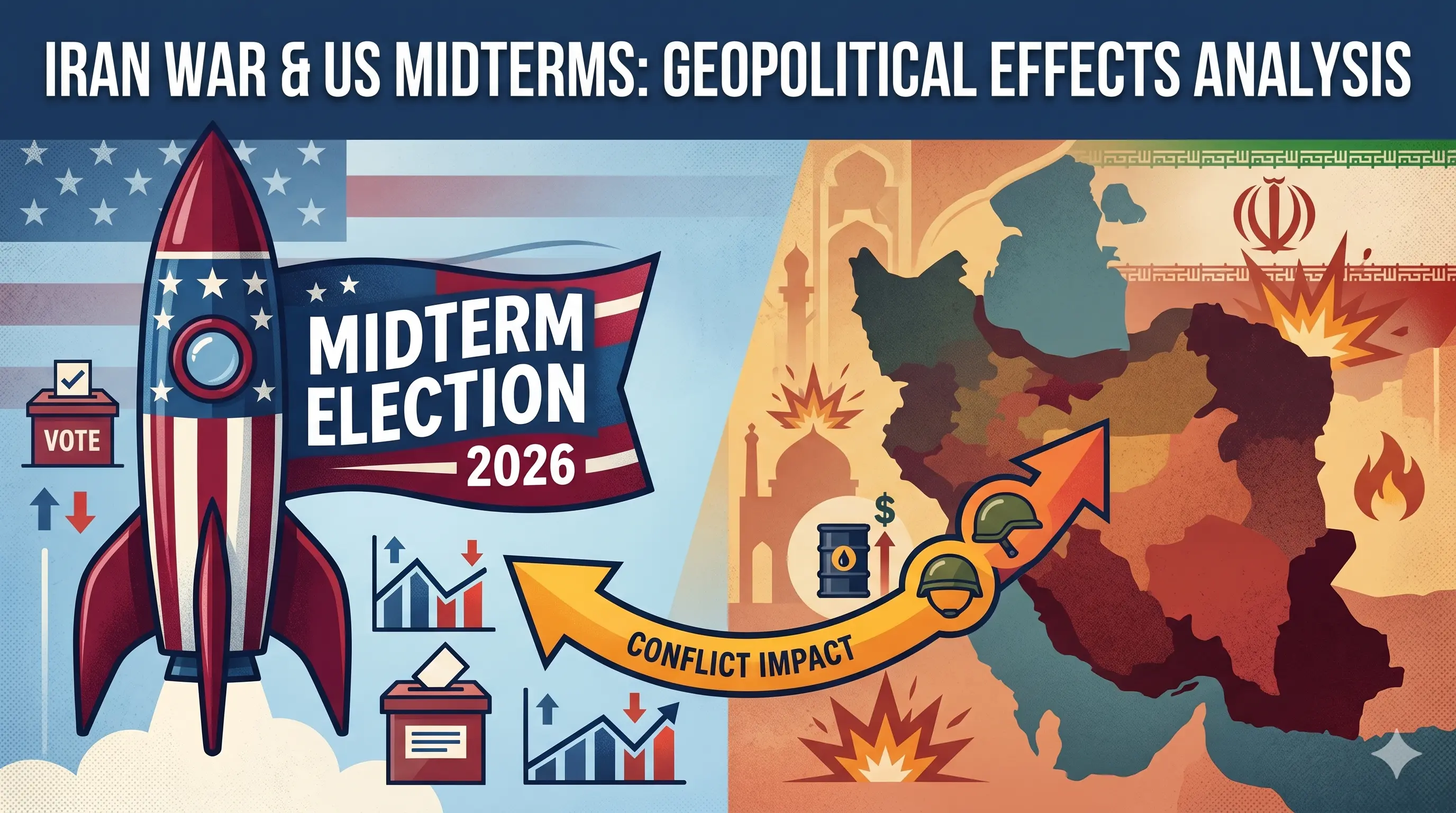
The 2026 midterm elections, scheduled for November 3, are shaping up to be a referendum on three simultaneous crises: a war in Iran that most Americans did not want, gas prices 48% above where they started the year, and a Republican Party struggling with the lowest voter enthusiasm figures recorded in a non-presidential election year in a generation.
The numbers tell a story no single outlet has fully assembled. Morning Consult's weekly tracking of the generic congressional ballot conducted among 28,235 registered voters with a margin of error of one percentage point shows DEMOCRATS LEADING 45% to 42% AS OF LATE APRIL 2026. That is a five-point net swing from the Republican advantage that existed at the start of Trump's second term. Among non-college voters, a group Republicans dominated by nine points at inauguration, the two parties are now effectively tied an eight-point shift in fifteen months that represents the largest single-group movement in the tracking cycle.
The 22-Point Enthusiasm Gap
The enthusiasm gap may be the deciding factor. A Washington Post-ABC News poll found 73% of Democrats described the 2026 election as more important than past midterms. Among Republicans, that figure was significantly lower. An Ipsos analysis put the gap at 22 percentage points — Democrats and Democratic leaners are that much more likely than their Republican counterparts to view November as a pivotal moment. Midterms are won by turning out a base, not persuading swing voters. A 22-point enthusiasm deficit is a structural problem no campaign spending can fully overcome.
The Iran war sits at the centre of this collapse. When US and Israeli forces struck Iran on February 28, 2026, oil markets responded within hours. Brent crude moved from $67 to above $90 per barrel by the following week. By late April, average US gasoline prices had risen from $2.74 to $4.07 per gallon — a 48.36% increase in four months.
For a president who ran on affordability, this is the defining liability. A Fox News poll found 61% of voters disapprove of Trump's economic management. CNN polling showed more than six in ten Americans believe the Iran military action did more harm than good.
Month-over-Month US Gasoline Price Increases
Impact of the Iran-USA war and Strait of Hormuz closure on domestic fuel.
| Period (2026) | Average Price Change | Percentage Increase |
|---|---|---|
| Jan to Feb | $2.74 → $2.87 | +4.56% |
| Feb to March | $2.87 → $3.81 | +32.98% |
| March to April | $3.81 → $4.07 | +6.69% |
The Senate & House Battlegrounds
The Senate map complicates the picture. Despite the polling headwinds, 22 of the 35 Senate seats up for election in 2026 are currently held by Republicans meaning Democrats need a net gain of four seats to take control. Prediction markets reflect the structural tension. Kalshi prices Republican Senate control at 56%. Polymarket puts it at 53%. Paddy Power offers 5/6 on both parties — effectively a coin flip. Cook Political Report has shifted North Carolina and Georgia from Toss-Up to Lean Democrat, and moved Ohio from Lean Republican to Toss-Up.
The House is more straightforwardly competitive. Redistricting has produced some Republican advantages the party drew nine more favourable congressional seats through mid-decade map changes but historical precedent and current polling both suggest the majority party faces real exposure when its president's approval is below 40% in the spring of a midterm year.
The Way Forward: Economics of Peace
What happens before November 3 matters enormously. An Iran peace deal that brings gasoline prices back toward $75-80 per barrel would transform the political landscape. An escalation that pushes oil above $120 would accelerate Democratic gains. For now, every week that passes at $4+ gasoline is another data point that the party in power cannot point to as progress on the core promise of affordability.
The OSINT signals tracked by Conflicts.Live show the Iran ceasefire remains fragile. The US naval blockade of Iranian ports continues despite the ceasefire agreement. Until Hormuz reopens fully, the oil price floor stays elevated — and so does the political cost to Republicans heading into November.